| Page 2 | Kisaco Research
 
Edge AI Summit 2020
18-20 Nov 2020
VIRTUAL SUMMIT | PDT Timezone
A 2020 report by Frost & Sullivan stated that 90% of industrial enterprises will be utilising edge computing by 2022. The value of the data that can be gleaned from intelligence ‘in the field’ is clear, but the current limitations of low power, on-device compute, data management and processing across the edge computing landscape continue to pose multiple engineering challenges. We’re thrilled to announce the agenda for the 3rd annual Edge AI Summit, which was the first ever dedicated summit focused on deploying machine learning on devices, and on the network infrastructure that supports the intelligent IoT. This year is all about Edge AI case studies! From ultra-low-power microwatt applications at the ‘sensor edge’, to larger milliwatt examples at the ‘device edge’ up to the non-power constrained ‘server-network edge’; we’ll be gathering a global audience (virtually!) to explore the most innovative real-world use cases of hardware and software facilitating AI at the Edge with examples from Uber AI, Google, Bosch, Magic Leap, Rakuten and many more…
 
Animal Health, Nutrition and Technology Innovation Europe 2022
21-23 Feb 2022
London, UK
Now in its 7th year, Animal Health, Nutrition and Technology Innovation Europe is the sector’s premier Innovation Summit showcasing the most exciting investment opportunities globally and connecting businesses with investors and strategic corporate partners. Our mission is to engage all key participants in the value chain so we can address the full scope of how animal health impacts pet owners, veterinarians, and farmers today.Following overwhelming feedback from the market, we have significantly expanded our programme this year with new focused content on nutrition and technology, alongside our production and companion animal health content. We will be running 4 separate innovation showcases in production animal health, companion animal health, nutrition, and technology.Our new programme will address the full extent of this ever-evolving market. We are excited to provide an innovation platform that is bigger than ever and to continue to play a critical role in shaping the future of the animal health industry by presenting the most exciting innovations in prediction, prevention, and cure.Book now to come and see for yourself!

Every payment integrity recovery, denial, and appeal eventually comes back to one place: the clinical documentation in the medical record. For payer PI teams that are still building out or scaling up, understanding how documentation is created, queried, and finalised before it ever reaches a claim is the single most useful foundation you can lay. RCX works on both sides of that fence, supporting hospital CDI programs and payer DRG validation reviews, and this panel brings together payer PI leaders and clinical documentation experts who have spent their careers inside the chart. The goal: help attendees build review programs that recover real dollars, hold up under appeal, and don't burn out their provider relationships in the process.

- How clinical documentation actually gets created, queried, and finalised on the provider side, and the DRG families where new PI programs should focus first
- What "defensible" looks like in a DRG validation or documentation-driven review, and how to design reviews that recover dollars without destroying provider relationships
- Where AI fits for a team just starting out, and what data and governance you need before turning it on

Author:

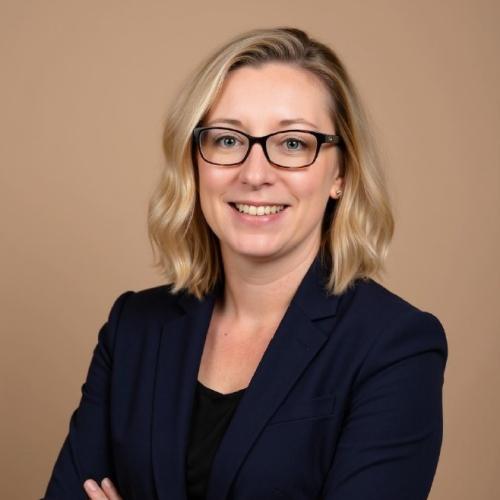
Barbara Shaw

Clinical Review Specialist
Mass General Brigham

Barbara Shaw

Clinical Review Specialist
Mass General Brigham

AI is now a practical operating priority for health plans. The biggest questions are no longer about whether AI can create value, but which use cases are working, how to govern them responsibly, and how to move from pilots to measurable performance.
This workshop will feature health plans of different sizes and leaders from across the payment integrity spectrum. Together, they will share real-world AI applications across claims review, fraud detection, documentation intelligence, provider engagement, anomaly detection, and pre-pay cost avoidance. The session will begin with health plan case studies, followed by an interactive audience Q&A panel where payer leaders will share lessons on what is working, where challenges remain, and what it takes to scale AI safely and defensibly.
Takeaways
• Pinpoint where AI is already delivering value across payment integrity workflows
• Understand what needs to be in place to scale AI responsibly and defensibly
• Learn how health plans are managing automation alongside provider relationships, regulatory pressure, and ROI expectations

This closing panel discussion provides an candid insight from payment integrity eaders from across the room as share what they have learned from programmes that did not go to plan, decisions they would make differently how they plan to move ahead for the rest of 026 and into 2027. Attendees can expect to walk away with actionable insights and real takeaways that can be implemented into their own PI programs.

- What a programme failure or mis-step taught a PI leaders something that success never would have
- What leaders know now that they wish they had known when they were building their programmes
- What the rest of the room should stop doing, start doing, or think about differently within their PI operations

Author:

Melissa McCabe

Payment Integrity Program Lead
Quartz

Melissa McCabe

Payment Integrity Program Lead
Quartz

Providers are quickly integrating AI into their documentation, coding, and appeals workflows. Plans are using AI to flag anomalies, automate review, and catch coding errors at scale. Many plans perceive provider AI use as a negative force driving more coding intensity and upcoding. But how can AI use by payers and providers be reframed to drive real-time, accurate claims adjudication that saves costs on both sides? This panel discussion brings together leaders from both perspectives to brainstorm collaboration strategies.

- Provider perspective: The impact of AI tools on claims accuracy and ‘coding intensity’
- Payer perspective: The impact of AI tools on provider relationships, communications, and perspectives on ‘coding intensity’
- How AI can be leveraged to enable collaboration and real-time claims adjudication

Author:

Linde Wilton

Senior Director of Operations
Provider Partners Health Plan

Linde Wilton

Senior Director of Operations
Provider Partners Health Plan

Author:

Diane Nguyen

Senior Project Specialist, Payment Integrity Planning and Implementation
Priority Health

Diane Nguyen

Senior Project Specialist, Payment Integrity Planning and Implementation
Priority Health

Author:

Neeraj Jaiman

Director of Medical Economics
BCBS NC

Neeraj Jaiman

Director of Medical Economics
BCBS NC

Author:

Corella Lumpkins

Manager of Coding, Compliance and Provider Education
Loudoun Medical Group P.C.

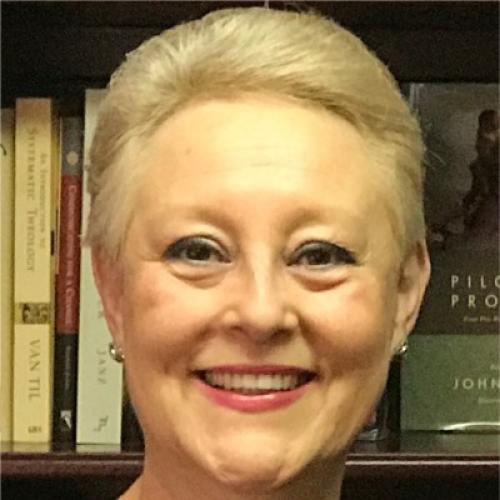
Corella Lumpkins is the Manager of Coding, Compliance & Provider Education at Loudoun Medical Group (LMG) - one of the largest and most diverse physician-owned, multi-specialty Accountable Care Organizations in Northern Virginia/DC suburbs. As a subject matter expert, Corella has over 35 years of experience working in every area of the healthcare revenue cycle. Corella holds a bachelor’s degree and eleven certifications with an extensive background in auditing, billing, coding, implementing corporate compliance programs, CDI, education, denial and practice management. Prior to joining LMG, Corella has held leadership roles at Lifebridge, Medstar, Johns Hopkins and the University of Maryland health systems.

Corella is an author, adjunct faculty member and national speaker currently serving on both the AAPC National Advisory Board and Association of Clinical Documentation Integrity Specialists (ACDIS) Leadership Council. Corella works closely with providers in navigating patient-centric value-based care. 

Corella Lumpkins

Manager of Coding, Compliance and Provider Education
Loudoun Medical Group P.C.

Corella Lumpkins is the Manager of Coding, Compliance & Provider Education at Loudoun Medical Group (LMG) - one of the largest and most diverse physician-owned, multi-specialty Accountable Care Organizations in Northern Virginia/DC suburbs. As a subject matter expert, Corella has over 35 years of experience working in every area of the healthcare revenue cycle. Corella holds a bachelor’s degree and eleven certifications with an extensive background in auditing, billing, coding, implementing corporate compliance programs, CDI, education, denial and practice management. Prior to joining LMG, Corella has held leadership roles at Lifebridge, Medstar, Johns Hopkins and the University of Maryland health systems.

Corella is an author, adjunct faculty member and national speaker currently serving on both the AAPC National Advisory Board and Association of Clinical Documentation Integrity Specialists (ACDIS) Leadership Council. Corella works closely with providers in navigating patient-centric value-based care. 

In this session, the Working Group shares the first exclusive savings PMPM benchmarks, including insight on methodology, process, outcomes, and plans moving forward. Attendees will share feedback and recommendations for the next iterations of benchmarks. The session will include breakout roundtables focused on best practices to exceed benchmarks by PI program and line of business.
- Presentation of baseline savings PMPM benchmarks
- Audience feedback on next benchmark iterations
- Breakout roundtable discussions focused on achieving benchmarks by PI program

Moderator

Author:

Natalie Clayton

Head of Market Intelligence
Kisaco Research

Natalie Clayton

Head of Market Intelligence
Kisaco Research
 

Darshak Sanghavi

Chief Medical Officer
Machinify

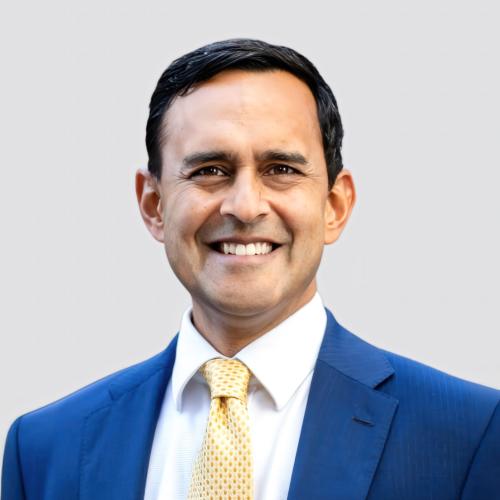
Darshak Sanghavi, MD, is Chief Medical Officer of Machinify.


Darshak Sanghavi

Chief Medical Officer
Machinify

Darshak Sanghavi

Chief Medical Officer
Machinify

Darshak Sanghavi, MD, is Chief Medical Officer of Machinify.


Recently, he was one of the first Program Managers at the Advanced Research Projects Agency for Health (ARPA-H), a new multibillion dollar U.S. agency that the President tasked with developing health programs “so bold no one else, not even the private sector, is willing to give them a chance.” Overseeing an investment portfolio of several hundred million dollars, his programs cover cures for rare genetic diseases, regenerative medicine, women’s health, organ transplantation, innovative payment and business models for prevention, and many other areas.

Prior, he was Global Chief Medical and Clinical Operating Officer for Babylon, the global end-to-end digital health care provider serving over a dozen countries and over 24 million people, with the mission of bringing “affordable and accessible health care to everyone on Earth.” He was a member of the senior leadership team taking the company public in 2021 and oversaw a team of 1500 in the company’s global operations in the United States, United Kingdom, and Rwanda with revenues exceeding $1B. He is the former Chief Medical Officer of UnitedHealthcare’s Medicare & Retirement, the largest U.S. commercial Medicare program with over $90B in annual revenue, where he directed major national clinical and affordability programs. Earlier, he was Chief Medical Officer at OptumLabs, the R&D hub of UnitedHealth Group, running a portfolio of industry-leading projects with dozens of academic, government, and industry partners.

Before then, he served in a senior role in the federal government, as the Director of Preventive and Population Health at the Center for Medicare and Medicaid Innovation, where he directed the development of large pilot programs aimed at improving the nation’s health care costs and quality. In this capacity, he was the architect of the Accountable Health Communities model, the Million Hearts Cardiovascular Risk Reduction model, and the Medicare Diabetes Prevention Program, impacting tens of millions of Medicare beneficiaries. He was a fellow and managing director of the non-partisan Brookings Institution, and chief of pediatric cardiology at UMass Medical School (where he still sees patients). He’s an award-winning medical educator, has worked around the world and published dozens of scientific papers on topics ranging from the molecular biology of cell death to tuberculosis transmission in Peruvian slums.

A frequent guest on NBC’s Today and past commentator for NPR’s All Things Considered, Dr. Sanghavi was a columnist with Slate, the New York Times, Boston Globe, and Washington Post. His best-seller, A Map of the Child: A Pediatrician’s Tour of the Body, was named a best health book of the year by the Wall Street Journal. He previously worked as a U.S. Indian Health Service pediatrician on a Navajo reservation.

Educated at Harvard and Johns Hopkins, he completed his residency in pediatrics and fellowship in pediatric cardiology at Boston Children’s Hospital.